Windy garden seating: why lighter resin pieces can still work
Lightweight outdoor seating often gets treated as a compromise. A chair that can be moved with one hand sounds less settled than a heavy metal or timber piece, especially in an exposed garden. Yet weight is only one part of how furniture behaves outdoors. Shape, material, placement and the way a piece is used all affect whether it feels steady in a breeze.
Durable resin furniture sits in an interesting middle ground here. Resin pieces can be light enough to rearrange easily, but well-designed forms can still feel reassuring in ordinary garden wind. The point is not that lightweight furniture is always better. It is that lightness can be useful when the design manages airflow, balance and drainage sensibly.
What "lightweight" really means in garden seating
In outdoor furniture, lightweight usually refers to how easy a piece is to move, not how flimsy it feels when someone sits on it. Resin chairs, benches and lounges can be made with hollow sections, moulded contours and reinforced areas where weight is carried. That keeps the overall mass manageable while still giving the seat and frame useful stiffness.
This matters in gardens where seating is moved often. A dining chair may be pulled out for meals, shifted into shade later, then stacked or stored when the weather turns. A chaise lounge may be angled toward the sun in the morning and moved away from a breezy edge in the afternoon. When a piece is manageable, people tend to use it more deliberately instead of leaving it in a poor spot.
Lightweight does not mean the same thing as delicate. A resin seat can flex slightly under load and still be fit for normal outdoor use. Some give is common in polymer furniture, and it can make a chair comfortable. The key is whether the flex is controlled, with no sharp movement, loose joints or visible strain around the legs and seat edges.
How wind actually affects a chair or lounge
Wind does not push on furniture in a simple, constant way. It flows around the back, under the seat and through gaps between legs. A broad, solid panel acts like a small sail. A slatted or open back lets more air pass through. Low, angled forms often settle more easily than tall upright shapes with large flat surfaces.
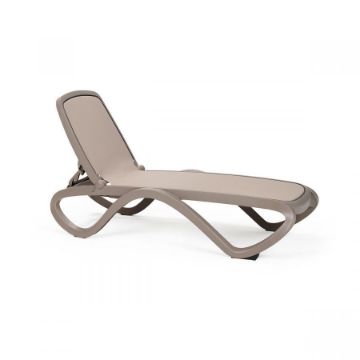
This is why two chairs of similar weight can behave differently. One may have a wide, flat back that catches gusts. Another may have curved members, open spacing and a lower profile that lets air slip past. The second piece may feel calmer even though it is just as easy to lift.
Wind exposure also changes around buildings, fences and planting. A garden can feel sheltered in one corner and exposed a few metres away, particularly where a gap between structures funnels air. A piece that feels settled beside a wall may catch more movement on an open patio. Placement often makes a bigger practical difference than trying to choose the heaviest possible seat.
Why resin construction can help
Resin construction gives designers room to shape airflow into the furniture itself. Backrests can be curved rather than flat. Seat panels can include openings. Legs can be moulded with generous contact points, and lounges can be shaped so air moves along the frame instead of pressing against one large surface.
Resin also handles moisture well compared with materials that soak up water. That helps outdoor pieces keep a consistent feel after rain or morning dew. Surface drainage is still worth considering, though. Flat areas that hold water can become slippery, and pooled water can leave marks as it dries. A good design sheds water from the seat and back instead of trapping it in ridges.
Temperature changes can affect all outdoor materials. Resin may expand and contract slightly as conditions shift, which is one reason moulded pieces are often designed with rounded edges and flexible geometry. This does not remove the need for sensible care, but it helps explain why a one-piece form can remain stable in normal seasonal use.
Ultraviolet exposure is another factor. Sunlight can gradually affect colour stability and surface finish on many outdoor products. Resin furniture intended for outside use is commonly made with materials chosen for that setting, but sun exposure still varies by garden. A piece in full, constant sun faces a different routine from one used mainly under cover.
The practical value of being able to move seating
A heavier chair may seem stable until it needs to be shifted. Then it can scrape paving, strain the frame or get left where it is uncomfortable. Lighter seating makes it easier to respond to the day. Seats can be grouped for dining, spread out for reading, or moved under shelter when the sky changes.
That flexibility can be especially useful around pools and patios, where the best position may depend on sun, spray and wind. Chaise lounges often need adjusting through the day. Dining sets may need to be cleared quickly before a storm. Benches can be placed where they feel sheltered without turning the move into a chore.
Low maintenance garden furniture is often chosen for this reason as much as for its finish. When pieces are easy to lift and clean, the whole seating area is simpler to manage day to day. That does not mean leaving furniture out in every condition. It means the routine is realistic enough that people actually follow it.
What to check before judging a lightweight piece
Start with the base. A chair or lounge should sit flat without rocking on a level surface. Look at the feet or contact points and think about where they will be used. Smooth paving, decking, grass and gravel all give different levels of grip. On slick surfaces, even a heavy piece can slide if the contact points are too smooth.
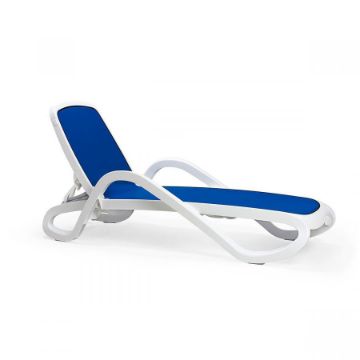
Next, look at the back and seat. Open shapes allow air to pass through, while broad solid panels catch more wind. Curved forms can help, but the overall proportions matter too. A very tall dining chair with a large back will usually feel more exposed than a low lounge chair, even if both are made from the same material.
Check how the piece feels when it is handled. A well-balanced chair should not feel top-heavy. A lounge should not twist awkwardly when lifted at one end. If a piece is easy to control while moving, it is usually easier to place with care. That matters in wind because a seat that is positioned thoughtfully is less likely to shift around.
For shared spaces, consider how the furniture will be used when empty. Unoccupied seating is more vulnerable to gusts than seating with someone sitting on it. Cushions, trays and loose covers can also catch air. Removing them in windy weather reduces movement and keeps them from being blown onto wet ground or into pool areas.
Placement makes a quiet difference
The calmest spot is rarely the most obvious one. Walls, hedges and screens can create sheltered pockets, but they can also cause swirling air at the ends. A seat tucked close to a wall may feel protected from one direction and exposed from another. Watching how leaves, flags or nearby planting move can reveal where air actually travels.
Grouping furniture can also change how it behaves. A dining set arranged tightly may create its own sheltered centre, though individual chairs at the outer edge still catch wind. Lounges placed in a line on an open patio need more attention than the same pieces set partly behind a windbreak. Small adjustments in angle can make a noticeable difference.
Drainage and ground slope matter as much as shelter. Furniture placed where water runs across paving may stay damp at the contact points. That can make a light chair feel less sure underfoot. Raising pieces slightly on a dry, even surface helps them settle and makes cleaning easier afterwards.
When heavier furniture makes more sense
Lightweight resin seating is not the answer for every setting. Very exposed rooftop spaces, coastal terraces and open areas with regular strong gusts may call for heavier pieces or permanent fixtures. In those places, the wind is not an occasional nuisance. It is a condition the furniture has to tolerate every day.
Heavier furniture can also suit spaces where seating stays in one position for long periods. A large bench beside a path or a dining table used in a fixed layout may benefit from extra mass. Even then, design still matters. A heavy piece with a broad flat back can catch wind more than a lighter piece shaped to let air through.
The practical choice is a balance between stability and flexibility. For many gardens, the ability to move a chair or lounge into a better position is more valuable than sheer weight. Durable resin furniture works well in that kind of setting when the pieces are well shaped, placed with care and stored sensibly during harsh weather.

Care habits that support stability
Routine care does not need to be complicated. Clear grit from the feet and joints, especially after wind has blown dust across a patio. Check that stacking chairs sit squarely and that any removable parts are properly seated before use. Keep seating away from sharp edges or rough ground that could scuff contact points.
Seasonal storage is worth planning before the weather turns. Lighter pieces are easier to stack, cover or move under shelter, and that is where their weight becomes a clear advantage. A covered seating group should be dry before it is covered, with enough airflow to avoid trapped dampness. In strong wind, covers themselves need to be secure, since loose fabric can flap and rub against the frame.
Low maintenance garden furniture still benefits from a little attention. A quick rinse, a soft cloth and a sensible place to store pieces during rough weather can preserve both appearance and performance. The aim is not to treat resin seating like something fragile. It is to keep it clean, dry and positioned so that normal wind does not become a daily problem.
Lightweight seating can be suitable for windy gardens when it is chosen for its shape as well as its material. Open backs, curved surfaces, stable bases and sensible placement all help a piece stay composed. The best test is practical: does the chair sit flat, can it be moved without strain, and does it have a form that lets air pass through? Those questions often reveal more than weight alone.